If you've tried to understand Bitcoin mining, you've probably read that miners "solve complex mathematical puzzles." That description is technically not wrong, but it doesn't tell you what's actually happening or why anyone should care. Here's a clearer version.
What miners are actually doing
Miners are running specialized computers that perform a specific kind of guessing game. Specifically:
- They take a batch of recent Bitcoin transactions ("a block").
- They combine it with some other data.
- They run a calculation that produces a fixed-length output (a "hash").
- They check whether the output meets a specific condition (starts with a certain number of zeros).
- If it does, they win the round. If not, they tweak one variable and try again.
The "puzzle" is finding the value that, when included in the calculation, produces an output meeting the condition. There's no math intuition involved — it's pure guessing, billions of guesses per second per machine.
When a miner finds a valid solution, they broadcast it to the network. Other nodes verify it (which is instant — the verification is much easier than the solving). The miner gets to add the block of transactions to the official Bitcoin record and is paid for their work in newly created bitcoin.
What this is actually doing for the network
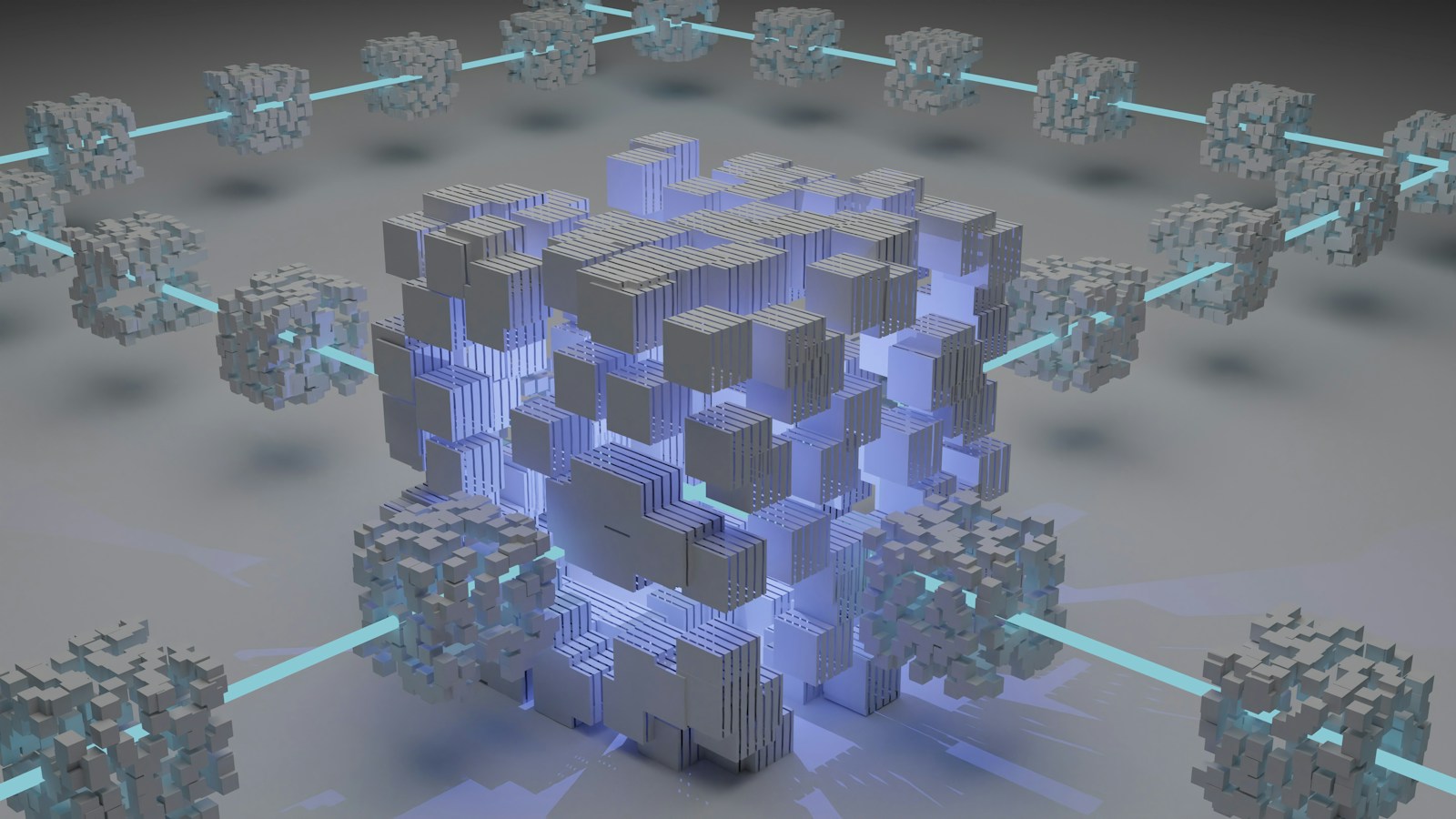
The puzzle isn't the point. The puzzle is the mechanism. Here's the actual function:
It creates a cost to add transactions. Adding to the Bitcoin record requires real electricity and real hardware. This makes it expensive to spam or manipulate the network. If transactions could be added freely, the system would have no defense against fraud.
It distributes the authority to record transactions. Anyone can run a miner. There's no central authority deciding which transactions are valid. The miner who solves the current puzzle gets to make the decision for the next block, and that's a different miner every time.
It creates an economic incentive for honest behavior. Miners who solve puzzles win bitcoin. If they tried to cheat (record fraudulent transactions, double-spend), the rest of the network would reject their block and they'd lose the electricity they spent. Cheating is economically irrational.
It creates a temporal ordering of transactions. Every block points back to the previous one. Modifying any old block would require redoing all the puzzle work for every block that followed. As the network grows, this becomes computationally impossible.
What miners earn
Two revenue streams:
Block subsidy. Every block, the miner who wins gets newly created bitcoin. The amount halves every four years (the famous "halving"). After the April 2024 halving, the block subsidy is 3.125 BTC per block. Roughly 144 blocks per day. So roughly 450 BTC are issued daily to miners.
Transaction fees. Every transaction in the block pays a fee. The miner collects all the fees in their block. On busy days, fees can rival the subsidy in total value. As the subsidy continues to halve over time, fees are expected to become the primary miner revenue.
At current prices, total daily miner revenue is around $40-50M across the network.
Who actually does this
Today, mining is dominated by large industrial operations. The romantic image of mining on a home computer is mostly nostalgia — the math problem has scaled so far that household-scale operations cannot meaningfully compete.
The major mining operators (Marathon, Riot, CleanSpark, Core Scientific, Foundry, and others) run warehouse-scale facilities in locations with cheap electricity. Texas, Wyoming, Quebec, Kazakhstan, Iceland, Paraguay. Each facility houses tens of thousands of specialized machines (ASICs) that do nothing but compute Bitcoin hashes.
The total computational power dedicated to Bitcoin mining is on the order of 700 exahashes per second. That number is roughly meaningless to read, but it's enormous — many orders of magnitude larger than the world's combined supercomputer capacity.
What this costs
Mining consumes electricity. A lot of it. Estimated global Bitcoin mining electricity consumption is around 0.5% of total global electricity use — roughly equivalent to a medium-sized European country.
This is one of the most-criticized aspects of Bitcoin. The fair counterarguments:
- A growing share (>50% by most estimates) of mining electricity is from renewable sources, often stranded renewable capacity that wouldn't have been used otherwise.
- The energy cost is what creates the security. A network secured by free computation would be trivially attackable.
- The energy consumption per unit of value secured is comparable to or lower than the energy cost of the traditional financial system.
The fair criticisms:
- Even renewable energy used for mining is energy not available for other uses.
- The total absolute consumption is large enough to matter even if the relative share is small.
- The argument that mining "uses stranded renewable energy" is partially true and partially marketing.
This is a genuine debate. Both sides have real arguments.
What happens when all the bitcoin are mined
Bitcoin's protocol caps the total supply at 21 million. About 19.8 million are currently mined. The remaining 1.2 million will be issued over the next century, with the rate halving every four years.
At some point around the year 2140, the last bitcoin will be mined. After that, miners will be paid entirely from transaction fees. The network's security model assumes fees will be sufficient to keep miners working. Whether this actually plays out is one of Bitcoin's open questions.
Takeaway
Miners are doing real work: providing the security that lets a global financial network operate without a central authority. The "math puzzle" framing is technically accurate but obscures what's actually valuable. What miners produce is trust without trust — a way to know that the record of transactions is correct without having to believe any particular party is honest.
You don't have to mine to use Bitcoin. The vast majority of users never will. But understanding what mining does makes the rest of how Bitcoin works much easier to think about.
Crypto is built on this kind of mechanism — economic incentives shaped by software rules. Once you see it once, you see it everywhere.