For two weeks the market braced for the Fed's decision, and yesterday afternoon it finally arrived. The headline was exactly what everyone expected — rates left unchanged — but the fine print was not. The Fed's own forecasts swung from expecting rate cuts this year to expecting rate hikes, and the market did not like it. Overnight, Bitcoin slid to about $63,900, every major coin is in the red, and the fear gauge has dropped sharply back toward the floor. This is what a "sell the news" morning looks like. Here is the plain-English version.
Where prices are today
The held breath let out, and it let out red. The numbers as of this morning:
- Bitcoin (BTC): about $63,890, down roughly 2.9% on the day
- Ethereum (ETH): about $1,728, down roughly 3.6%
- XRP: about $1.17, down roughly 4.2%
- Solana (SOL): about $70.97, down roughly 3.5%
The total value of all crypto sits at about $2.28 trillion, down about 2.3% on the day, with Bitcoin making up roughly 56% of it. There is no split this morning and no coin flip — everything moved the same direction, down, with the smaller and riskier coins falling a bit harder than Bitcoin. That uniformity is the tell. When every coin drops together by a similar amount, the cause is almost never crypto-specific; it is a single outside event hitting the whole risk market at once. Yesterday's event was the Fed.
Why the market dropped
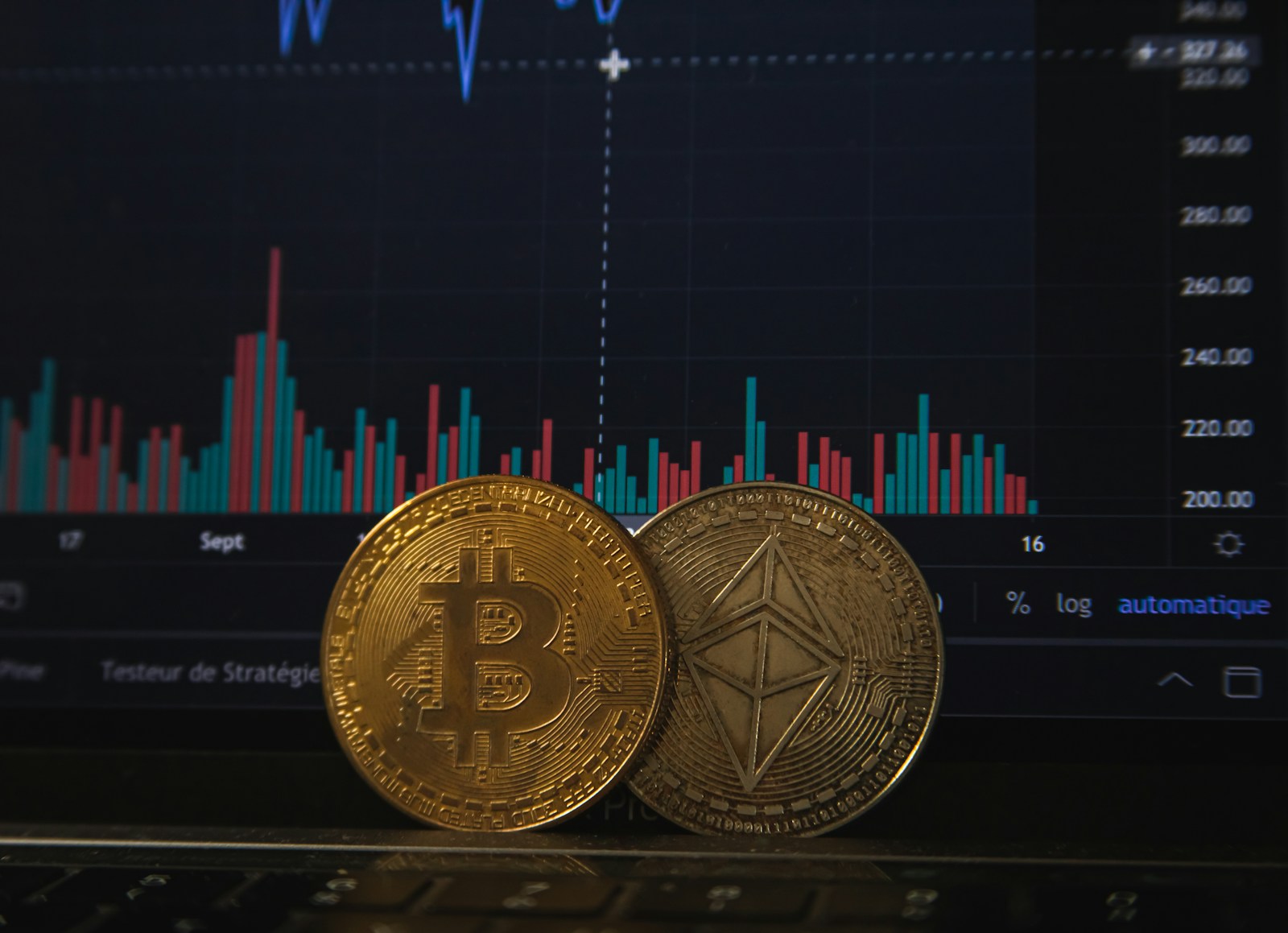
The decision itself was a non-event, exactly as expected: the Fed held its key interest rate at 3.50%-3.75% in a unanimous vote. If that were the whole story, the market would have shrugged. It wasn't. Two things underneath the headline did the damage:
- The forecast flipped from cuts to hikes. Alongside the decision, the Fed publishes a "dot plot" — a chart of where each official expects rates to go next. Three months ago the typical official penciled in a cut later this year. Yesterday, nine of the eighteen officials penciled in at least one hike before year-end, and six of them expect two. That is not a small tweak; it is a full U-turn in direction. Higher rates make safe assets like cash and bonds more attractive and riskier ones like crypto less so, so a forecast that flips toward hikes pulls money out of crypto.
- The new Fed chair took away the roadmap. This was Kevin Warsh's first decision as chair, and he made a deliberate change in style: where the previous Fed told markets in advance roughly what it planned to do, Warsh said the Fed will simply react to the data as it comes, meeting by meeting. Markets dislike that, because it means more uncertainty before every future decision. Less guidance, more guessing — and guessing makes nervous markets sell.
The fear gauge slumps back toward the floor
The Crypto Fear and Greed Index — a simple 0-to-100 mood meter where low means fear and high means greed — sits at 15 today, down sharply from 22 yesterday. That erases the week-long climb off the bottom in a single day and drops the gauge back into the deepest part of "extreme fear." The held-breath calm of the past week broke the moment the decision landed, and the mood snapped straight back to worry.
The standing caution still applies, and it cuts both ways. A reading this low is not automatically a reason to sell — by the time a gauge reaches the floor, the bad news that drove it there is usually already in the prices. Extreme fear has historically marked moments closer to bottoms than to tops, though "historically" is not "this time," and nobody rings a bell. What a 15 honestly tells you is narrow: the market got an answer it did not want, and it is frightened today. It does not tell you where prices go next.
What to watch next
- Whether $63,000 holds. Bitcoin slipping under the level that held all last week is the line traders are watching now. Holding above the low-$60,000s would suggest the selloff was a one-day reaction to the Fed; breaking decisively below it would suggest the hawkish news is still working its way through. Either way, expect a choppier few days than the quiet week before.
- How the "higher for longer" message settles in. A market can take a day to digest a surprise. The first reaction is rarely the final word — watch whether the rest of the week stabilizes as the shock wears off, or whether the hawkish forecast keeps pressure on.
- Whether the whole-market move stays uniform. As long as every coin keeps falling together, this is a macro story about interest rates, not about crypto itself. If coins start to separate — some recovering while others keep sliding — that is the sign the market has stopped reacting to the Fed and gone back to trading on its own news.
The takeaway
The market walked to its big test, got an answer it did not want, and sold off: Bitcoin down to about $63,900, every major coin red, and the fear gauge slumping to 15. The decision itself changed nothing — rates held — but the Fed's forecast flipped from cuts to hikes and its new chair took away the roadmap, and that was enough to break the week's careful calm in an afternoon.
If you are investing, a hawkish-surprise day is exactly the kind of moment the boring advice was built for: think in years, not days. A single red day driven by a rate forecast is noise on the timescale that matters. Consider buying small fixed amounts on a regular schedule rather than reacting to yesterday's headline, and size your position so that a drop like this is uncomfortable, not life-changing.
Crypto is volatile. You may lose all the money you invest. Only put in what you can afford to be wrong about.