Today is the last trading day of July, which makes it a natural moment to stop watching the minute-by-minute chart and look at the whole month. When you do, you find something that does not match the mood at all. Over July, crypto did not just hold up — it beat the stock market handily. And yet the crowd is more frightened today than it was yesterday. That gap is worth sitting with.
Where prices are today
- Bitcoin (BTC): about $64,300, up roughly 0.5% on the day
- Ethereum (ETH): about $1,904, essentially flat
- Solana (SOL): about $74.20, up roughly 0.8%
- XRP: about $1.08, up roughly 0.4%
Two names outside the usual four are worth a mention today: BNB is up about 3% near $590, and Cardano (ADA) is up nearly 4%. Nothing dramatic, but a little green is leaking back into the corners of the market that had been quiet all week. The total value of all crypto sits near $2.3 trillion.
The month-end scorecard: crypto quietly won July
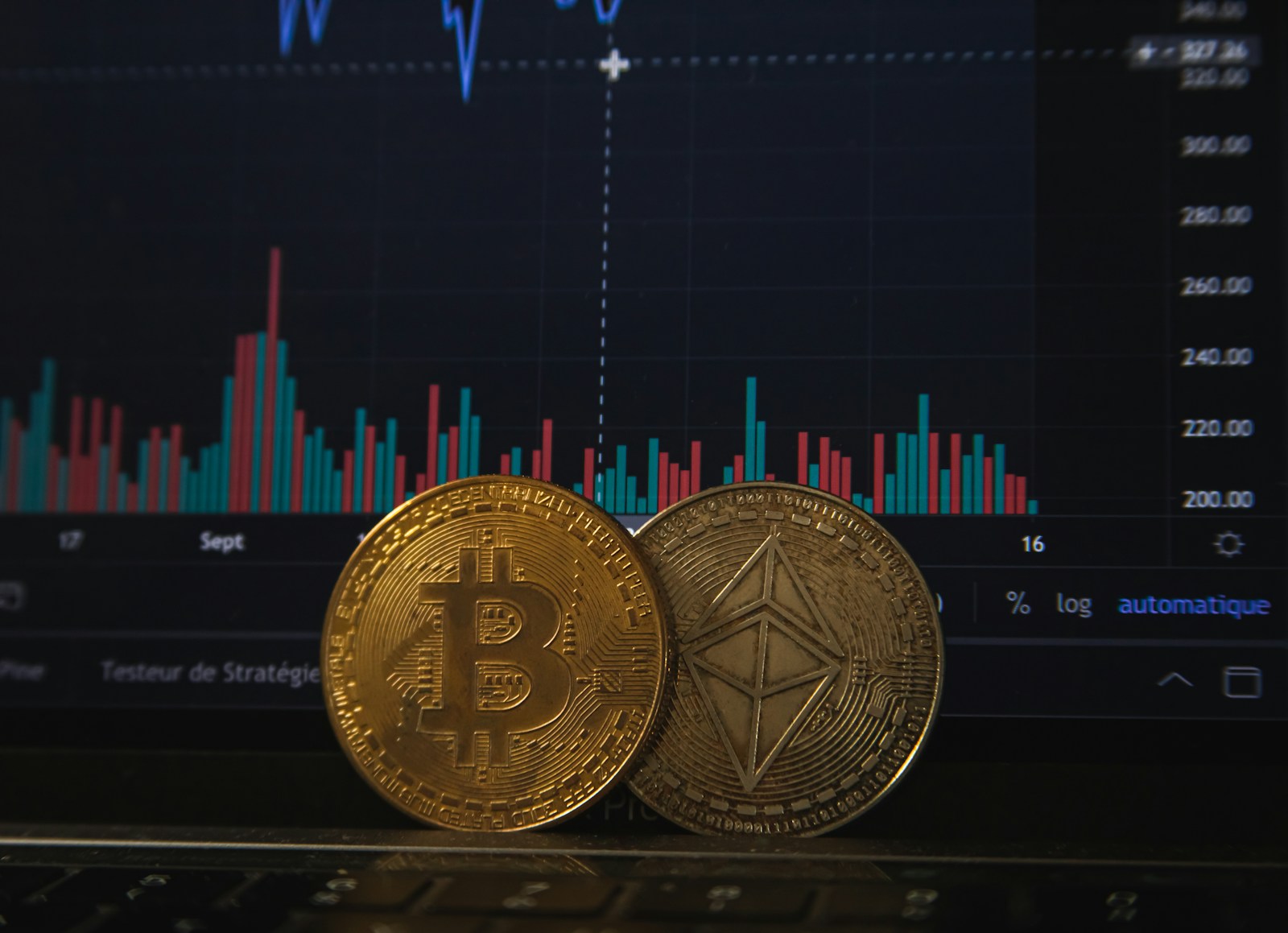
Here is the number that should surprise you. Across July, Ethereum rose about 20% and Bitcoin about 9%. Over the same stretch, the tech-heavy part of the U.S. stock market went the other way — the Nasdaq 100 slid roughly 9%, and the chipmaker stocks that led the market for years fell more than 20%. In plain terms: while the stocks everyone talks about were having a rough month, crypto was one of the best-performing things you could have owned.
That is not the story you would guess from the headlines, and it is not the story these daily recaps told day to day. Read back over the week and you will see a lot of "flat," "frozen," "holding its breath." Day by day it felt like nothing was happening. But small green days stack up, and a month of them added up to a real lead over traditional markets. This is one of the quiet lessons of investing: the month can look very different from any single day inside it.
So why is the mood getting worse, not better?
Now the puzzle. The Crypto Fear and Greed Index — the 0-to-100 gauge of market emotion, where low is fearful and high is greedy — reads 25 today. That is down from 28 yesterday, and it has crossed the line from plain "fear" into "Extreme Fear." So prices are up on the month, up on the day, and yet the gauge of how people feel just got worse.
How can both be true? Because sentiment is not really about the price level — it is about momentum and comfort. The gains this month were slow and grinding, not exciting. There was no breakout, no green candle that made anyone feel rich. Meanwhile the backdrop stayed tense: a Fed that just warned rates could still go up, oil that climbed all month, and a Bitcoin price stuck well below where it traded earlier in the year. People can be up money and still nervous, and that is exactly what a reading of 25 against a winning month is telling you.
For a long-term investor there is a useful reframe here. Extreme Fear is historically the mood that shows up closer to bottoms than to tops. It is not a buy signal on its own — plenty of scary markets keep falling — but it is worth noticing that the crowd feels awful during a month crypto actually beat stocks. When feeling and fact drift this far apart, the feeling is usually the less reliable of the two.
The fresh news: Wall Street lines up behind a dollar-token on Ethereum
The genuinely new development this week has nothing to do with the daily price wiggle. More than 140 major companies — including Visa, Mastercard, Stripe, BlackRock, BNY, and Coinbase — announced they are backing a new stablecoin called Open USD, built to run first on Ethereum.
If "stablecoin" is a fuzzy word, here is the simple version. A stablecoin is a digital token designed to always be worth exactly one U.S. dollar. You can think of it as a dollar that lives on a blockchain: it does not swing in price like Bitcoin, and its job is to move money quickly and cheaply between people, businesses, and apps without the delays of the old banking rails. The two giants of this world today are called USDT and USDC, and together they move trillions of dollars a year.
What makes Open USD notable is who is behind it. This is not a crypto-native startup — it is a roll call of the companies that run the world's card networks and manage the world's money. When Visa, Mastercard, and BlackRock agree to stand behind the same dollar-token, it is a strong signal that the traditional financial system now sees this plumbing as something it wants to own, not ignore. And they chose to build it first on Ethereum, which is a quiet vote of confidence in the network Ether runs on. That is one reason to keep an eye on Ethereum's relative strength, even on flat-price days like today.
A fair note of caution: Open USD is an announcement, not a live product yet. It is expected to launch later in the year, and big consortiums have a way of moving slowly. But the direction of travel is the point.
The takeaway
Month-end is a good moment to check whether the story in your head matches the story in the numbers. This month, the numbers say crypto had a strong July and beat the stock market, while the mood gauge says people are more scared than they have been in weeks. Both are real. The mismatch is the lesson: how a market feels day to day is a poor guide to how it actually did.
Nothing about that requires you to do anything. The reasons to own crypto for the long term did not change because a sentiment gauge dropped three points, and they did not change because Visa put its name on a new token. The steady move is the same as it has been all week: ignore the daily noise, notice the longer trend, and let the fear settle before you decide it means anything.
Crypto is volatile. You may lose all the money you invest. Only put in what you can afford to be wrong about.