Yesterday the market steadied and everything moved together, up a fraction of a percent in near-perfect lockstep. Today it turned red — but this time the coins went their separate ways. Bitcoin barely budged, down under 1%, while Solana, XRP, Cardano and Dogecoin fell two to three times as hard. Yesterday's recap ended by flagging exactly this: watch whether the higher-beta names wake up. Today they did, and they woke up to the downside. That split is the whole story, and it teaches one of the most useful ideas a new investor can learn.
Where prices are today
Red across the board, but notice how uneven the damage is:
- Bitcoin (BTC): about $77,955, down roughly 0.8% on the day
- Ethereum (ETH): about $2,452, down roughly 0.4%
- Solana (SOL): about $102.91, down roughly 2.3%
- BNB: about $685.84, down roughly 1.3%
- XRP: about $1.36, down roughly 2.4%
- Cardano (ADA): about $0.196, down roughly 3.1%
- Dogecoin (DOGE): about $0.083, down roughly 2.9%
The total value of all crypto slipped to about $2.62 trillion, down roughly 2.9% on the day, and Bitcoin now makes up about 59.5% of that — a little more than yesterday. Hold on to that last detail. Bitcoin fell less than 1%, but the whole market fell almost 3%. Those two numbers only fit together if the coins outside Bitcoin fell a lot harder — and they did. When the smaller coins drop faster than Bitcoin, Bitcoin's slice of the pie grows even as its price falls. That rising slice is called Bitcoin dominance, and today it ticked up for exactly this reason.
Today's lesson: why the smaller coins swing more
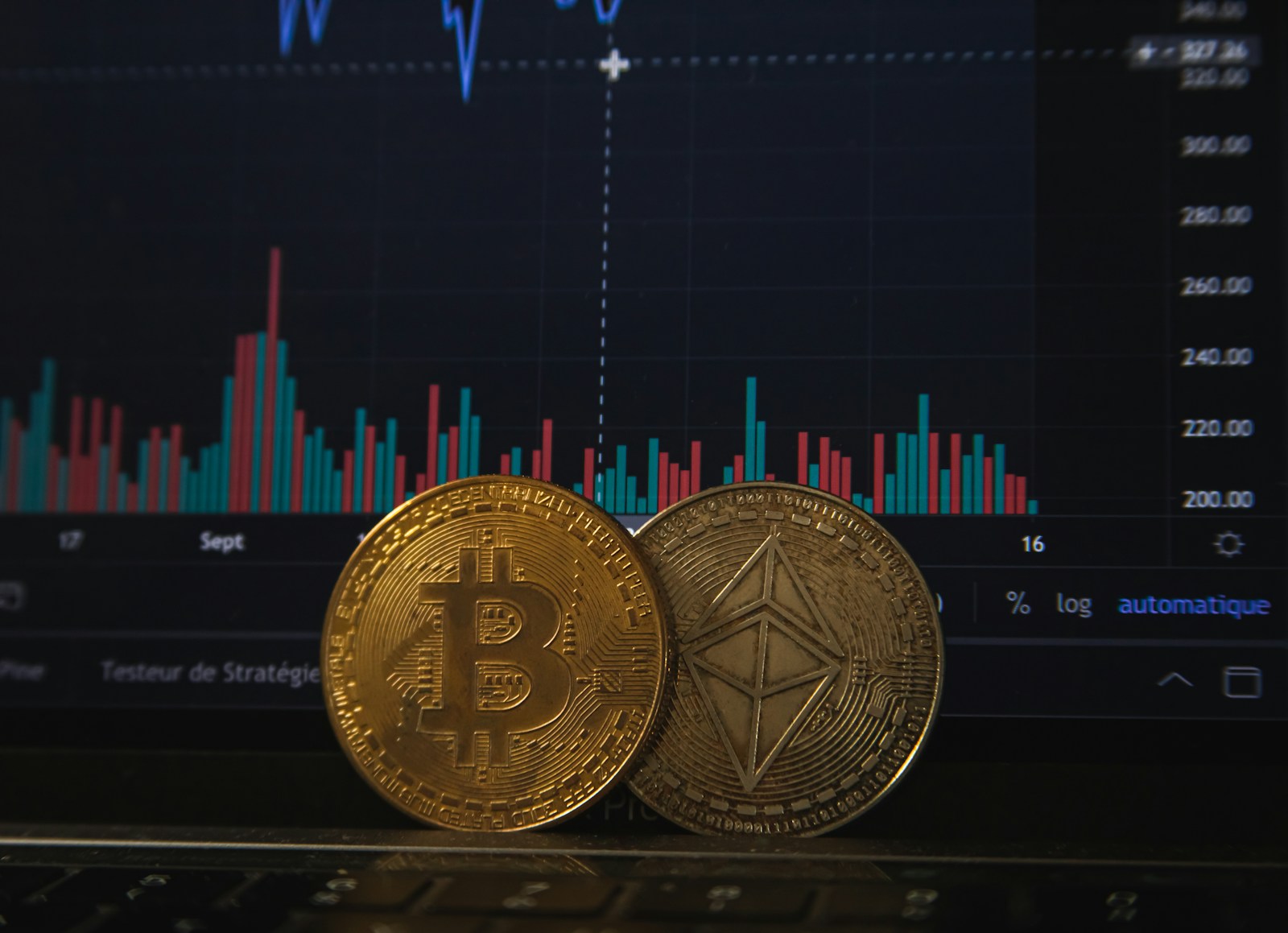
Here is the pattern worth burning into memory, because you will see it over and over: on a down day, the smaller coins usually fall harder than Bitcoin, and on an up day, they usually rise harder too. Traders have a word for this — "beta" — but you do not need the jargon. You just need the plain idea: the smaller and newer a coin is, the bigger its swings tend to be, in both directions.
Why does that happen? Two simple reasons. First, size. Bitcoin is by far the largest, most widely held, most heavily traded crypto there is. It takes an enormous amount of buying or selling to move it much. A coin a fraction of its size moves further on far less money, the same way a rowboat rocks in a wake that a cargo ship never feels. Second, nerves. When the mood sours, people tend to sell their riskier bets first and hold on to what feels safest. Within crypto, Bitcoin is the closest thing to "safe," so money often shuffles toward Bitcoin and away from the smaller coins on a nervous day. That shuffle is the dominance number rising in front of your eyes.
Why does this matter for how you invest? Because it reframes what a red day actually is. A 3% drop in "the market" was not 3% everywhere — it was a rounding error in Bitcoin and a real bite in Dogecoin. If your money is spread across the smaller coins, your down days will feel sharper than the headline number, and your up days will feel giddier. Neither feeling is a signal to act. It is just the arithmetic of holding swingier things. Knowing that in advance is what keeps a normal red Tuesday from feeling like an emergency.
The fear gauge cools off
The Crypto Fear and Greed Index — the 0-to-100 mood meter where low means scared and high means greedy — reads 62 today, down from 69 yesterday. That is a real seven-point step down, the biggest single-day move the gauge has made all week, and it drops the mood from the middle of "Greed" toward its lower edge. Still greedy, but noticeably less sure of itself.
A cooling gauge on a red day is not surprising — the mood follows the prices, and prices fell. What is worth noticing is that it cooled without panicking. Seven points is the market getting a little more cautious, not scared. It is not a forecast and it is not a signal to do anything; it is a thermometer confirming the room got a touch colder today. The useful habit is to watch which direction it drifts over several days, not to flinch at any single reading.
Keep the honest context in view
One red day, led by the smaller coins, changes the big picture no more than yesterday's quiet green one did. Bitcoin near $77,900 is still well below its record high near $126,000 from last October, and the market is still chopping around inside the same broad sideways range it has traded in all month. Today is not the start of a slide any more than yesterday was the start of a recovery. Both are just days inside a range-bound market that keeps handing back what it gains and buying back what it loses.
What to watch next
- Whether Bitcoin keeps holding up better than the pack. If Bitcoin stays steady while the smaller coins keep sliding, dominance will keep rising — a classic sign of a cautious, risk-off mood inside crypto. If the smaller coins suddenly outrun Bitcoin to the upside, that is often the first hint the mood is warming again.
- Whether the $78,000 area holds for Bitcoin. It has been the market's resting point all week. A clean break below it would say the sellers are gaining ground; holding it would say the range is intact.
- Whether the fear gauge keeps cooling. One seven-point step is noise. Several days of steady cooling would be the mood actually turning, and worth paying attention to.
The takeaway
Today the market turned red, but unevenly: Bitcoin held near $78,000 while Solana, XRP, Cardano and Dogecoin fell two to three times as hard, and the fear gauge cooled to 62. The lesson is the one hiding in that split — the smaller and newer a coin is, the bigger its swings, up and down. That is not a flaw to fear or a feature to chase; it is simply how holding riskier things feels. A fixed amount invested on a regular schedule rides those swings without asking you to guess which coin will lurch next, or when.
Crypto is volatile. You may lose all the money you invest. Only put in what you can afford to be wrong about.